Early one morning, I quietly made my way outside, leaving the dark dorm room where my sleeping roommate lay motionless. Upon exiting the building, I shivered. Fall’s fresh arrival carried drafts of frigid morning air, and the sun only continued to rise later each day. In the cold darkness, I eagerly waited for my watch to connect to GPS so I could begin my run and warm myself up.
As I ran and grew comfortable, my thoughts wandered. On this particular run, they first reflected gratitude, influenced by my surroundings—gratitude for nature, life, and human capability. But then I thought back to my motionless roommate—and to physics. One question, in particular, came to mind: How much more will my roommate have aged than I over the course of this run?
It’s an absurd question! It defies common sense. Isn’t time the same for everyone in every space? No, actually—and this is key to our understanding of the universe. To understand why time is not the same for everyone and to answer the question that came to my mind on that run, we need to talk about special relativity.
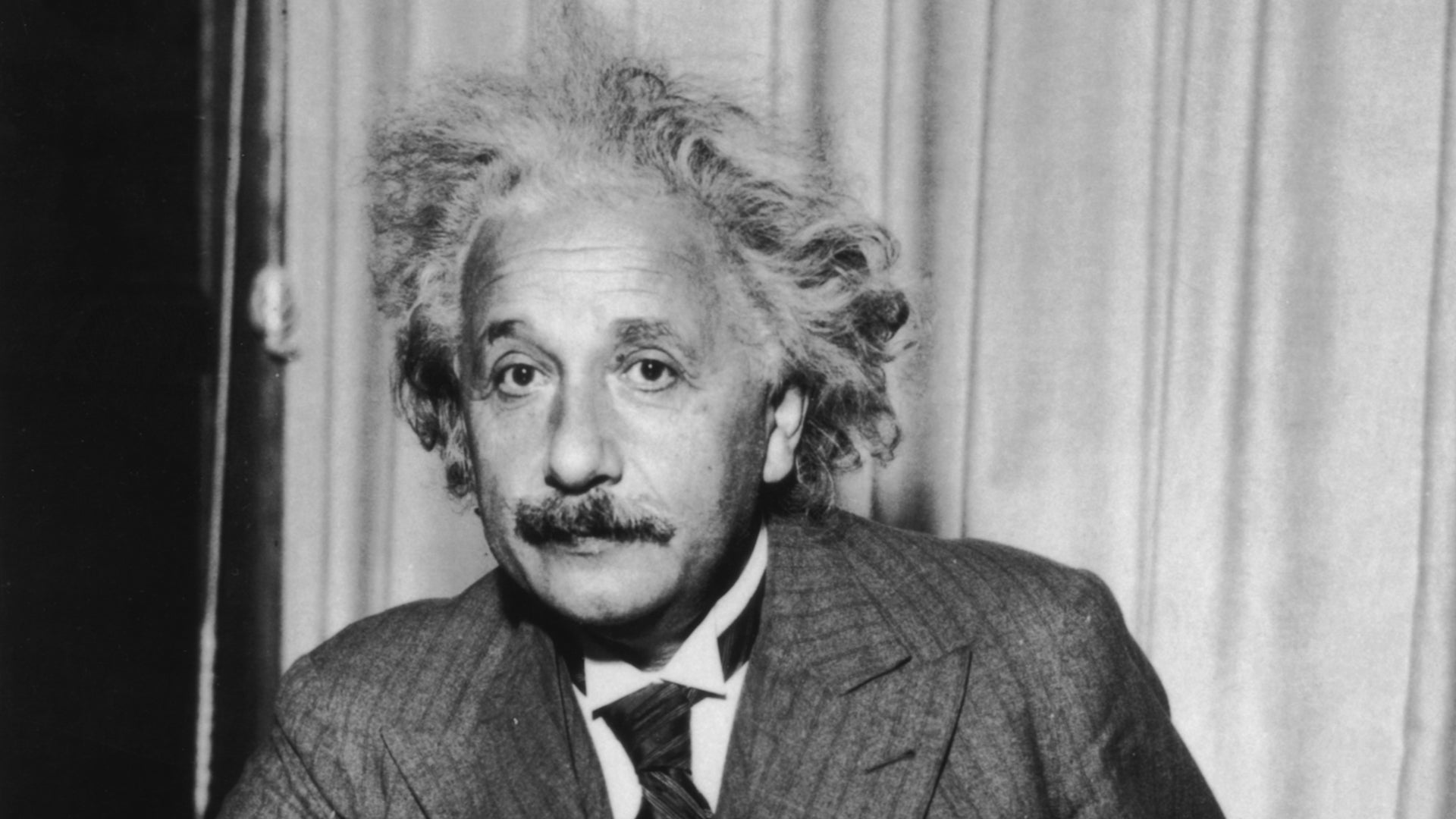
With regard to physics, relativity refers to how physical phenomena like light, space, time, and gravity behave depending on the relative motion between an object and an observer. In 1905, Albert Einstein published his Theory of Special Relativity, explaining specifically how time and space change between object and observer. But before going into more detail about Einstein’s theory, why was it necessary in the first place?
Picture this: you’re running at a steady 6 miles per hour (mph) and you throw a ball at 30 mph in the direction you are running. In your frame of reference, the ball is traveling away from you at 30 mph, but to an observer standing perpendicular to the ball, it’s traveling at 36 mph since it was initially going 6 mph in your hand before you threw it. This is Galilean relativity, named after 17th-century Italian astronomer and physicist Galileo Galilei, and this addition of velocities of the same direction is called a Galilean transformation. Galilean transformations feel very intuitive. However, they do not work at high speeds.
The speed of light is 299,792,458 meters per second (in a vacuum), often rounded to 300,000,000 meters per second. Nothing can reach the speed of light because light is composed of photons, and photons are massless. Thus, it would take an infinite amount of energy to accelerate something with mass to the speed of light.
We can now see where Galilean relativity falls apart. If you ran at ½ the speed of light and threw a ball in the same direction at ¾ the speed of light, Galilean relativity says the ball would look like it’s going faster than the speed of light to an observer standing perpendicular to it. But, since nothing with mass can reach the speed of light, this cannot be true.
This brings us to the necessity of Einstein’s 1905 Theory of Special Relativity. In this theory, Einstein wrote two postulates: 1) the laws of physics are the same everywhere, and 2) everyone sees light at the same speed no matter how fast they are moving. Consequently, every object moving at constant velocity (not accelerating) must be treated as being in its own reference frame. Special mathematical transformations, which he specified, must be applied to physical properties in one frame in order to see how they appear in another frame. These transformations keep the cosmic speed limit set at the speed of light, and reveal some unbelievable truths about our universe.
Due to special relativity, things moving at different speeds experience different amounts of time; the faster you go, the more time someone at rest will experience compared to you. This is referred to as time dilation, and it’s what I was thinking about on that early-morning run.
While I ran at an approximately constant velocity of 6 mph for 40 minutes, my motionless, sleeping roommate actually slept longer than 40 minutes! If we perform the necessary relativistic calculations, it turns out that while I ran for 40 minutes, my roommate slept for about 40 minutes and 96 femtoseconds! Given that 96 femtoseconds are a mere 0.000000000000096 seconds though, my roommate had not aged noticeably.
What if one were to go faster? The fastest that humans have ever traveled is 25,000 mph—the maximum speed reached on Apollo 10’s re-entrance into earth’s atmosphere, back in 1969 as the astronauts returned from the moon. If a human traveled at that speed for 50 years straight, someone at rest on earth would live for about 50 years and 1 second.
Perhaps that was not as significant as you were hoping for. Although 25,000 mph (11,200 meters per second) is the fastest that humans have ever traveled, it is still only 0.0037% of the speed of light. Muons, however, are particles that travel at about 99.8% of the speed of light. Each time high-energy particles called cosmic rays collide with earth’s atmosphere, muons are created, shooting down toward earth’s surface. If you asked, a muon would say it lived for about 2.2 microseconds and traveled something like 600 meters, even though we observe it traveling for about 35 microseconds—all the way down to earth’s surface (a lot farther than 600 meters)! Both we and the muon agree that it sees earth’s surface, but the muon’s own perceived distance and time traveled are shorter than we observe since the muon is moving really fast relative to our frame (earth).
Someday, if humans could travel through space at the speed of a muon, one could spend 2.2 years traveling and return to earth to see that 35 years have elapsed. Unfortunately, these days of near-light-speed human travel are nowhere in sight, given our current technology and the immense amount of energy it would take to reach such speeds. In the meantime, let’s enjoy the beauty of our morning hours, and ponder the strange but true consequences of special relativity.